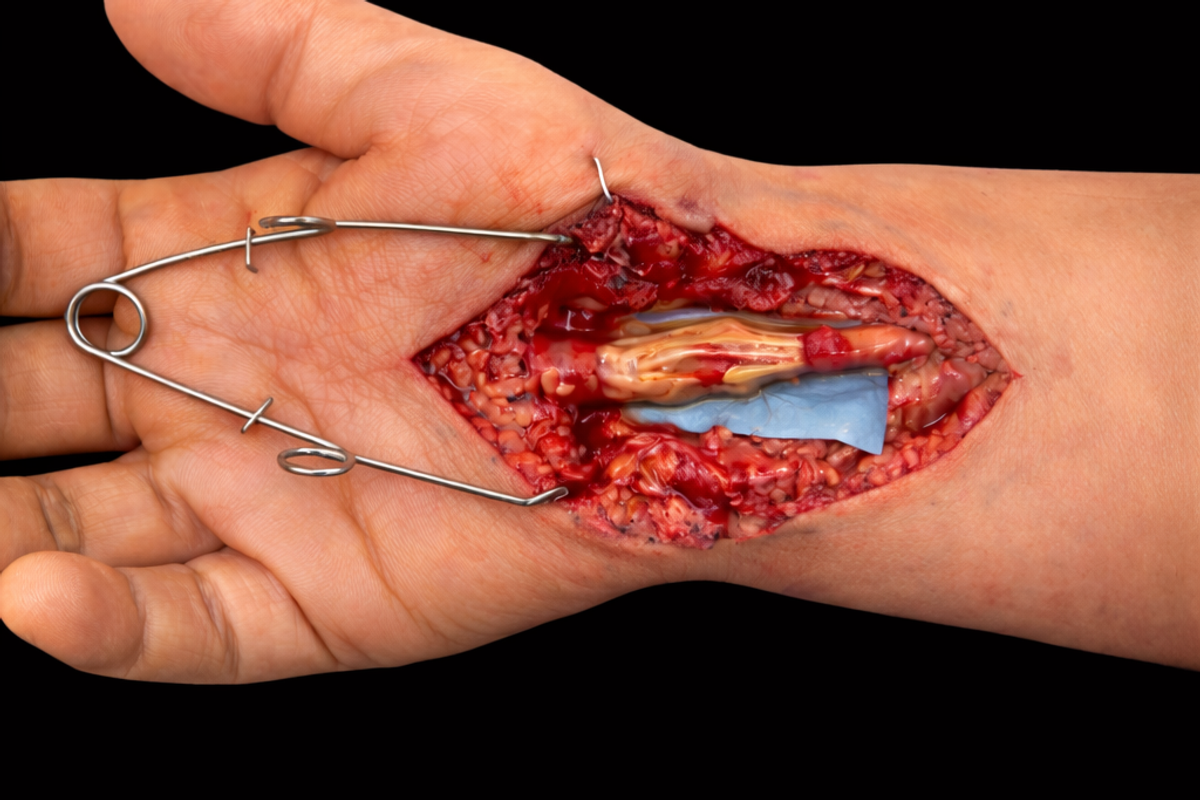
A nerve injury in the hand or wrist can result in numbness, loss of sensation, weakness, or inability to move certain fingers. These injuries are most commonly caused by lacerations (cuts from glass, knives, or machinery), but can also result from fractures, crush injuries, or stretch injuries. Nerve repair is one of the most technically demanding areas of hand surgery, requiring microsurgical expertise and careful postoperative management.
How Nerves Work in the Hand
Three major nerves control sensation and motor function in the hand: the median nerve, ulnar nerve, and radial nerve. Each supplies specific areas of the hand. Additionally, each finger has two digital nerves—one on each side—that provide sensation to the fingertips. When a nerve is cut, the signals it carries are interrupted, resulting in numbness, tingling, or weakness in the area that nerve supplies.
Signs of a Nerve Injury in the Hand or Wrist
- Numbness or loss of sensation in specific areas of the hand or fingers
- Inability to feel sharp/dull or hot/cold in the affected area
- Weakness in grip or pinch strength
- Inability to move certain fingers or the thumb normally
- A wound or laceration near the path of a known nerve
Any laceration on the hand that results in numbness downstream from the cut should be evaluated by a hand surgeon—there may be an underlying nerve injury that needs repair.
Nerve Repair Surgery
When a nerve is cut, it generally does not heal on its own—surgical repair is needed. The timing of repair is important: primary repair (performed within days of the injury) typically produces the best outcomes.
Nerve repair is performed using microsurgical techniques under high-powered magnification. I align the cut nerve ends and suture them together using sutures finer than a human hair (8-0 nylon). In cases where there is a gap in the nerve that prevents tension-free repair, a nerve graft or nerve conduit may be used to bridge the gap.
What to Expect After Nerve Repair
Nerve recovery is a slow process. After repair, the nerve must regenerate from the repair site to its target (the fingertip, for example). Nerves regenerate at approximately one inch per month—so recovery takes months, not weeks.
- Weeks 1–3: Wound healing, splint protection, gentle motion
- Months 1–3: Early signs of nerve recovery may appear—tingling (Tinel’s sign) advancing along the nerve path
- Months 3–6: Gradually returning sensation, though it may feel different initially (hypersensitive or altered)
- Months 6–12+: Continued improvement in sensation quality and motor function. Maximum recovery may take up to 12–18 months
Hand therapy plays an important role in nerve recovery, including sensory re-education exercises that help the brain correctly interpret the returning nerve signals.
Factors That Affect Nerve Recovery
- Age: Younger patients typically recover better than older patients
- Location: Injuries closer to the fingertip recover faster (shorter distance for the nerve to regenerate)
- Type of injury: Clean lacerations recover better than crush or avulsion injuries
- Timing of repair: Earlier repair generally leads to better outcomes
- Which nerve: Digital nerve repairs have excellent outcomes; major nerve repairs are more variable
Microsurgical Nerve Repair in Phoenix
If you’ve suffered a laceration, injury, or trauma to your hand or wrist and are experiencing numbness or weakness, time is important. I provide expert nerve evaluation and microsurgical repair for patients across the Phoenix metro area—from Scottsdale to Buckeye, Mesa to Peoria.
Call (602) 258-4788 or visit toddrichardsmd.com to book an appointment with Dr. Todd Richards. Most insurance plans accepted. Same-week appointments often available.