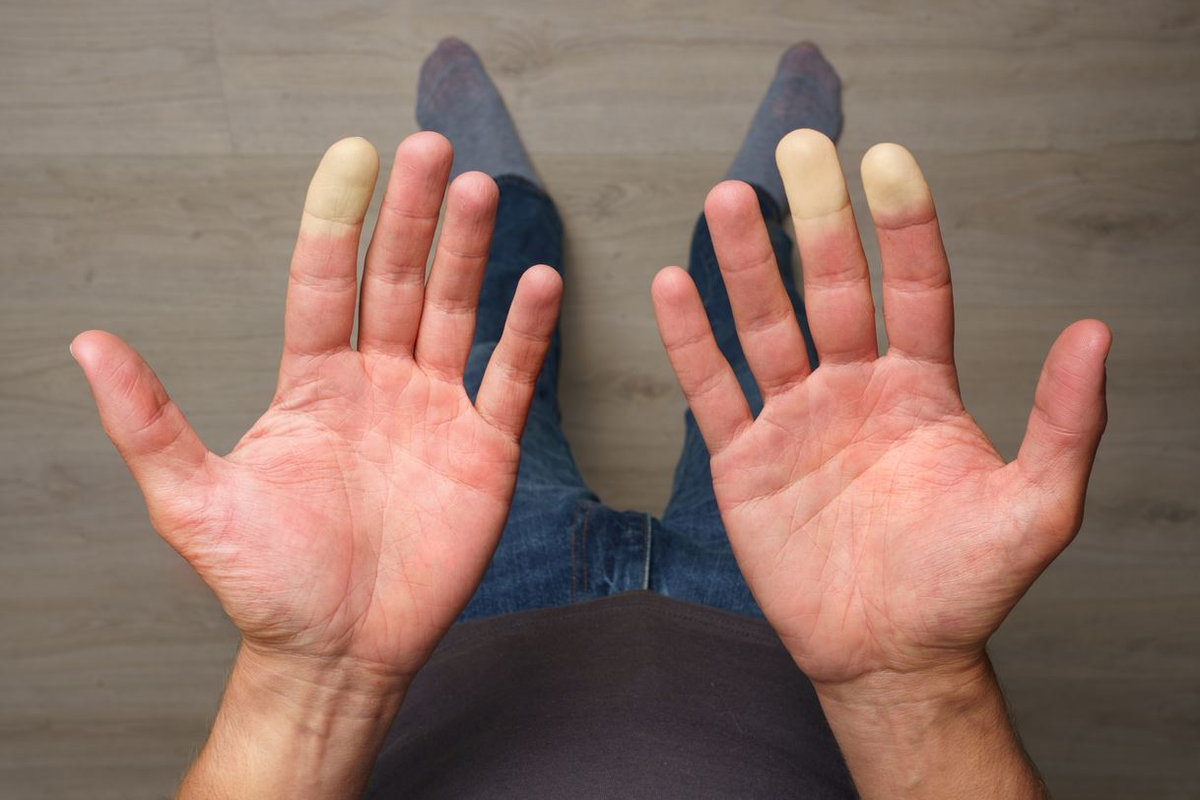
You're walking through the frozen food aisle at the grocery store, and suddenly your fingers turn stark white, then blue, then red—accompanied by numbness, tingling, and pain. If this sounds familiar, you may have Raynaud's disease (also called Raynaud's phenomenon).
“But I live in Phoenix—how can I have a cold-related condition?” I hear this often. While Arizona's warm climate helps, Raynaud's attacks can be triggered by air conditioning, cold water, refrigerated items, and even emotional stress—not just winter weather.
What Is Raynaud's Disease?
Raynaud's is a condition in which the small blood vessels in the fingers (and sometimes toes, ears, or nose) overreact to cold temperatures or stress. These vessels go into spasm, dramatically reducing blood flow to the affected digits. This causes the characteristic color sequence: white (no blood flow), blue (deoxygenated blood), and red (blood rushing back as the vessels reopen).
Primary vs. Secondary Raynaud's
Primary Raynaud's
The more common form. It occurs on its own without an underlying disease. Symptoms are typically mild, affect both hands symmetrically, and do not cause permanent tissue damage. It often begins in teenage years or early adulthood and is more common in women.
Secondary Raynaud's
This form is associated with an underlying condition—most commonly autoimmune diseases like scleroderma, lupus, or rheumatoid arthritis. Secondary Raynaud's tends to be more severe and can lead to digital ulcers (sores on the fingertips) or, in extreme cases, tissue loss. It's important to distinguish between the two forms, which is why evaluation by a hand surgeon or rheumatologist is valuable.
Symptoms
- Fingers turning white, then blue, then red in response to cold or stress
- Numbness, tingling, or pain during an attack
- Attacks lasting minutes to hours
- Affected fingers may feel cold and numb even in mildly cool environments
- In severe cases (secondary Raynaud's): fingertip ulcers, painful sores, or pitting scars on the fingertips
Diagnosis
I diagnose Raynaud's based on your history and symptoms. To distinguish primary from secondary Raynaud's, I may order blood tests (ANA, ESR, rheumatoid factor) to screen for underlying autoimmune conditions. A nailfold capillaroscopy—examining the tiny blood vessels at the base of your fingernails under magnification—can also help differentiate the two forms.
Treatment
Lifestyle Modifications
- Keep your entire body warm—core warmth prevents finger vasospasm
- Wear insulated gloves when handling cold items (even reaching into the freezer)
- Chemical hand warmers for outdoor activities
- Avoid smoking—nicotine constricts blood vessels and dramatically worsens Raynaud's
- Limit caffeine and certain medications (decongestants, beta-blockers) that can trigger vasospasm
- Stress management—emotional stress is a common trigger
Medications
For patients with frequent or severe attacks, calcium channel blockers (like nifedipine or amlodipine) are the first-line medication. These relax the blood vessel walls and improve blood flow to the fingers. Other options include topical nitroglycerin, phosphodiesterase inhibitors, and in severe cases, IV prostacyclin infusions.
Surgical Options
For refractory cases with digital ulcers or severe symptoms despite medical management, digital sympathectomy can be considered. This microsurgical procedure strips the sympathetic nerve fibers from around the digital arteries, reducing vasospasm and improving blood flow to the fingertips.
Raynaud's Evaluation in Phoenix
If your fingers are turning white or blue, even in the Arizona heat, it's worth getting evaluated. I can determine whether this is primary or secondary Raynaud's and develop a treatment plan that keeps your fingers safe and functional. Serving patients across Phoenix, Scottsdale, Mesa, Chandler, Gilbert, and the entire Valley.
Call (602) 258-4788 to book an appointment with Dr. Todd Richards. Most insurance plans accepted. Same-week appointments often available.